
Industrial strata units are becoming more popular among Small and Medium-sized Enterprises (SMEs). They offer flexibility and are cost-effective. In today’s fast-paced business world, SMEs are looking for real estate options that can grow with them.
The flexibility of industrial strata units lets SMEs adjust their space as needed. This makes them a great choice in the Singapore real estate market.
Key Takeaways
- Industrial strata units offer flexibility for SMEs.
- Cost-effectiveness is a key advantage.
- SMEs can scale according to their needs.
- Industrial strata units are a viable real estate option.
- They are gaining popularity in Singapore.
Overview of Industrial Strata Units
Industrial strata units are changing how SMEs view rental properties in Singapore. They are individual units in flatted factories or industrial complexes. These units are managed under a strata-titled ownership structure.
These units offer flexibility and ownership benefits. They are perfect for SMEs looking for commercial properties that fit their needs.
One key feature of industrial strata units is their strata-titled ownership. Owners have title to their units and shared ownership of common areas. Recent data shows they are cost-effective for SMEs. They share maintenance costs and other expenses for common areas.
The benefits of industrial strata units include:
- Flexibility in unit size and layout
- Cost-effective ownership structure
- Centralized maintenance and management
- Access to shared facilities and amenities
For SMEs, industrial strata units are a good choice. They offer commercial properties that meet their needs without high upfront costs or long-term leases.
Benefits of Industrial Strata Ownership
Owning industrial strata units offers many benefits for SMEs. They provide the flexibility needed in today’s fast business world. These units can grow or shrink as your business needs change.
Industrial strata units can be tailored to fit your business’s specific needs. This customization helps improve your operations and efficiency. It’s great for businesses that need to adjust their storage, production, or office space often.
Adaptability to Business Needs
Being able to change your industrial strata unit as your business grows is a big plus. You can add new equipment, hire more staff, or change how you work. This flexibility is key for SMEs.
- Customization options allow for tailored storage solutions.
- Flexible layouts can accommodate changes in production or operational needs.
- Expansion or reduction of space can be done efficiently.
Investing in industrial strata units is a smart move for SMEs. It helps them save money in the long run and can even increase the value of their property. This stability is crucial for businesses looking to grow.
Buying property through industrial strata units is also more affordable than owning a whole building. This makes it easier for SMEs with limited funds to invest in property. It’s a great way to support your business’s growth.
In summary, industrial strata ownership offers flexibility, customization, and investment potential. These benefits make it a great choice for SMEs in Singapore. Understanding these advantages helps businesses make better decisions about their property and investments.
The Importance of Location
Location is key for the success of industrial strata units among SMEs. Where these units are located affects their access to important infrastructure, markets, and customers.
In Malaysia, semi-D factories are often found in places like Bukit Raja, Klang, and Shah Alam. These spots offer great access to highways, ports, and cities. This boosts the work efficiency of SMEs.
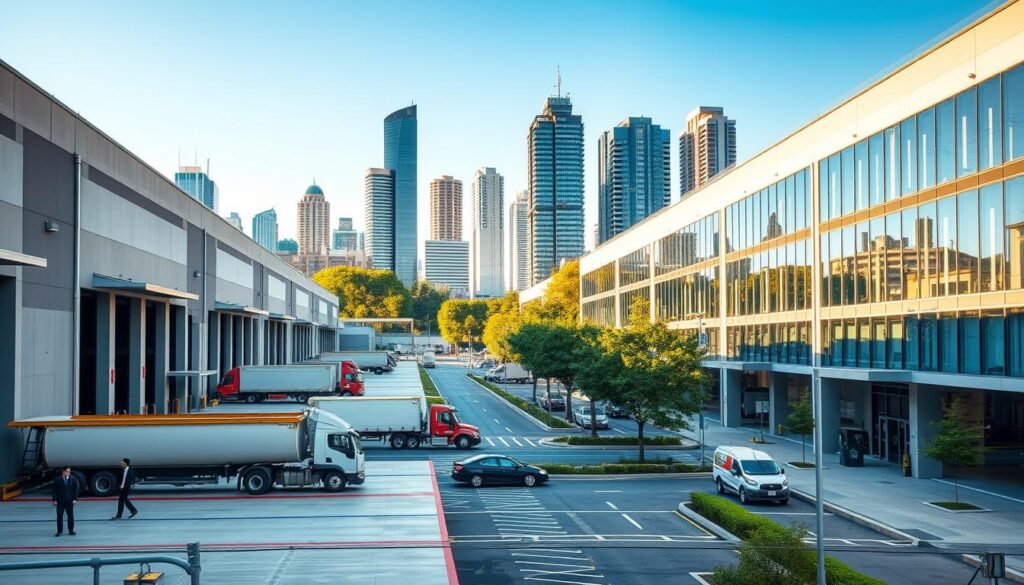
For SMEs, being close to good transportation can cut down on costs and improve supply chain management. Being near cities also makes it easier to reach more customers and find skilled workers.
- Access to major transportation hubs
- Proximity to urban centers and markets
- Enhanced supply chain efficiency
Good property management is vital to keep the value of industrial strata units high, even in prime spots. Investors and SMEs should think about the selling potential of their units. This depends on their location and how well the property is managed.
Flexibility and Customization Options
Industrial strata units are a great choice for SMEs in Singapore’s property market. They offer flexibility and customization options.
These units let SMEs tailor their space to fit their business needs. They can change the layout, add special equipment, or design for better efficiency.
One big plus is the freedom to change as the business grows. This adaptability is key in today’s fast business world.
- Customization options allow businesses to create a workspace that is tailored to their specific needs.
- The ability to modify the property can help SMEs improve their operational efficiency and productivity.
- Flexibility in design and layout can also enhance the overall working environment, contributing to employee satisfaction and retention.
Investing in an industrial strata unit gives SMEs property ownership benefits. They can also adapt their workspace as needed. This makes industrial strata units a good choice for businesses in Singapore’s industrial market.
Legal and Financial Considerations
Industrial strata units offer SMEs a unique chance. But, it’s key to grasp the legal and financial sides. SMEs need to think about several things before diving into industrial strata units.
The ownership of industrial strata units can be tricky. It involves a strata title, which lets multiple units in a property be owned and managed on their own. It’s important for SMEs to get the strata management framework right. This ensures they follow all legal rules and regulations.
There are different ways to finance industrial strata units. SMEs can look into bank loans and other financial tools. It’s important for SMEs to weigh these options well. They should pick the one that fits their financial state and business aims.
Some key financial things to think about include:
- Initial purchase costs and fees
- Ongoing strata fees and upkeep costs
- The chance for rental income or property value growth
Investing in industrial strata units needs careful planning and research. SMEs should talk to legal and financial experts. This way, they can fully understand what their investment means.
Market Trends in Industrial Real Estate
Industrial real estate is changing fast, thanks to new trends. These changes are big for small and medium-sized enterprises (SMEs). They affect both rental and investment properties.
There’s a big push for flexible and adaptable spaces. SMEs want places they can easily change to fit their needs. This is leading to the creation of new, flexible industrial units.
Investment in industrial real estate is also on the rise. People see industrial units as a smart investment. The growth of online shopping and logistics has made these properties even more valuable.
- Increased demand for last-mile delivery facilities
- Growing need for cold storage facilities
- Rise in demand for flexible, short-term leases
For SMEs, knowing about these trends is key. It helps them make smart choices about their industrial space needs. By keeping up with trends, SMEs can stay ahead in a fast-changing market.
Industrial strata units let SMEs own or rent spaces that meet their exact needs. This can make their operations more efficient and save money. It helps their businesses grow.
Challenges for SMEs in Industrial Property
SMEs in Singapore face big hurdles with industrial properties. They deal with money issues and following rules. Buying or selling industrial property is hard and needs a good grasp of the market.
One big problem is not having enough money. This makes it hard for SMEs to buy or grow their industrial property. They also have smaller networks of suppliers. This limits their ability to adapt to market changes or get good deals.
Being flexible and quick to adapt is key for SMEs in the industrial property market. They need to be ready for changes in demand, supply chain issues, or new rules. Being adaptable helps when buying or selling property.
Some common problems SMEs have with industrial property include:
- Following rules and zoning laws
- Money issues and finding funding
- Changes in the market and demand
- Lack of knowledge in property deals
To tackle these issues, SMEs can try a few things. They can get professional help, look for different funding options, and keep up with market trends. Being proactive and flexible helps SMEs deal with the complex world of industrial property. This way, they can make smart choices when buying or selling.
The Role of Industrial Strata Units in Business Growth
Industrial strata units play a big role in the success of SMEs in Singapore’s property market. As SMEs grow, they need more space that they can customize. This is why the demand for industrial strata units is going up.
These units give SMEs a solid base to expand their business. They help SMEs take advantage of new market opportunities. Good property management is key to keeping these units valuable. It makes them appealing to buyers and tenants.
The property market is changing, with more demand for industrial space. SMEs that invest in industrial strata units gain flexibility and customization. This helps them adapt to market changes.
Here are some key benefits of industrial strata units for SMEs:
- Flexibility in terms of space and layout
- Customization options to suit specific business needs
- Potential for long-term capital appreciation
- Ability to attract and retain talent with modern and well-designed facilities
Understanding the role of industrial strata units helps SMEs make smart property investments. They can use these units to boost their success in the market.
Case Studies: Successful SMEs in Industrial Strata Units
Many SMEs in Singapore say industrial strata units helped them grow. These units offer flexibility and customization, meeting SME needs.
A tech startup bought an industrial strata unit in a prime spot. This move helped them establish a strong market presence. They could also change the property as their needs changed.

The startup chose an industrial strata unit for its dual role. It served as both an operational base and a long-term investment. Its location in a bustling industrial area made it easy to reach markets and talent.
A manufacturing SME also grew by using an industrial strata unit. It gave them the space to increase production without high costs.
- The SME gained from owning a property, a valuable asset on their balance sheet.
- The unit’s customization helped improve productivity.
- The location cut down on transportation costs and improved supply chain management.
These examples show how industrial strata units benefit SMEs in Singapore. They offer flexibility, customization, and the security of property ownership. This makes them crucial for SME growth and success.
More SMEs are choosing industrial strata units, making them a key part of Singapore’s commercial properties. Their adaptability and scalability drive this trend.
Conclusion: The Future of Industrial Strata Units
The future of industrial strata units in Singapore looks promising. Rental and investment properties are becoming more appealing to SMEs. This trend is expected to continue as the demand for industrial space grows.
Businesses looking to enter the market can consider buying industrial strata units. This option offers flexibility and customization. It also holds potential for long-term growth and returns.
As the market evolves, SMEs need to stay updated and make smart choices. Whether renting or buying, being informed is key. This way, they can thrive in the changing industrial real estate scene.