
The e-commerce revolution has changed how we buy and sell goods. Now, more people shop online, leading to a big increase in the need for warehouses.
This change has brought big shifts in logistics, distribution, and real estate. The fast growth of e-commerce means more warehouses are needed, affecting the property market.
So, the demand for warehouse space is likely to keep growing. This is because the e-commerce sector is expanding.
Key Takeaways
- E-commerce growth drives demand for warehouse space.
- The shift to online shopping impacts logistics and distribution.
- Commercial real estate is affected by the surge in e-commerce.
- The property market is influenced by the growing need for warehouses.
- E-commerce continues to shape the future of warehouse demand.
Introduction to E-Commerce and Its Growth
The last decade has seen a big change in how people shop. This is because of the rise of e-commerce. Online shopping is now easier, offers more choices, and is often cheaper.
More and more people prefer to shop from home. This has led to a big jump in online buying. As a result, the need for fast and reliable delivery has grown.
E-commerce has changed how we shop and what we expect from delivery. Businesses must now focus on making their logistics better. They need to rent warehouse spaces that can handle the ups and downs of online sales.
E-commerce is expected to keep growing. This means we’ll see more online shopping. Businesses will need to find ways to manage their inventory better, using warehouses strategically.
To wrap it up, here’s why we need more warehouse space because of e-commerce:
- More people are shopping online.
- Supply chains need to be faster and more efficient.
- There’s a growing need for smart warehouse rentals.
The Correlation Between E-Commerce and Warehouse Demand
The rise of e-commerce has led to a big increase in the need for commercial property, like warehouses. Unlike old-school retail, where products are kept in stores, online shops need big warehouses. These places store, sort, and ship products right to customers’ doors.
This change has greatly affected how businesses work. It has made the need for efficient logistics and fast delivery very important. This has pushed up the demand for warehouses in good locations.
E-commerce and traditional retail have different needs when it comes to storage. Online shops need lots of space to handle their inventory. This inventory is often spread out in different places to ensure quick delivery to customers.
- E-commerce companies need large, centralized warehouses for efficient inventory management.
- Strategically located warehouses are crucial for reducing delivery times and costs.
- The demand for flexible warehousing solutions is on the rise, accommodating fluctuating inventory levels.
As e-commerce keeps growing, the need for warehouses as investment property will likely increase. This opens up chances for investors in commercial property, like in Singapore.
The Role of Technology in Warehousing
Advanced technologies are changing the warehousing world for the better. They make operations more efficient. Automation, robotics, and AI-driven systems are leading this change.
Modern fulfillment centers use automation and robotics to work smarter. These tools help them process orders fast, package items efficiently, and ship quickly. This makes customers happier.
Robotics and AI in Inventory Management
Robotics and AI are now key in managing inventory. They help track stock levels, automate storing and picking, and improve warehouse layouts.
- Robotic systems move goods quickly, saving on labor and reducing mistakes.
- AI analyzes data to forecast demand, helping warehouses prepare for busy times.
- AI-powered systems handle tasks like tracking inventory and ordering more stock when needed.
These technologies boost efficiency and cut costs. By automating tasks, warehouses can use their resources better. This leads to savings and higher productivity.
As technology advances, robotics and AI will play an even bigger role in warehousing. Warehouses that use these technologies will be ready for the e-commerce boom. They’ll stay ahead in the market.
Urban Warehousing: A Solution for E-Commerce
E-commerce is booming, and urban warehousing is key for last-mile delivery. It’s vital for e-commerce as it makes shipping faster and more reliable. This is what customers want.
Being close to cities means quicker delivery. This is a big plus. Landlords are turning old malls and big stores into warehouses. This is making old commercial spaces useful again and boosting the property market.
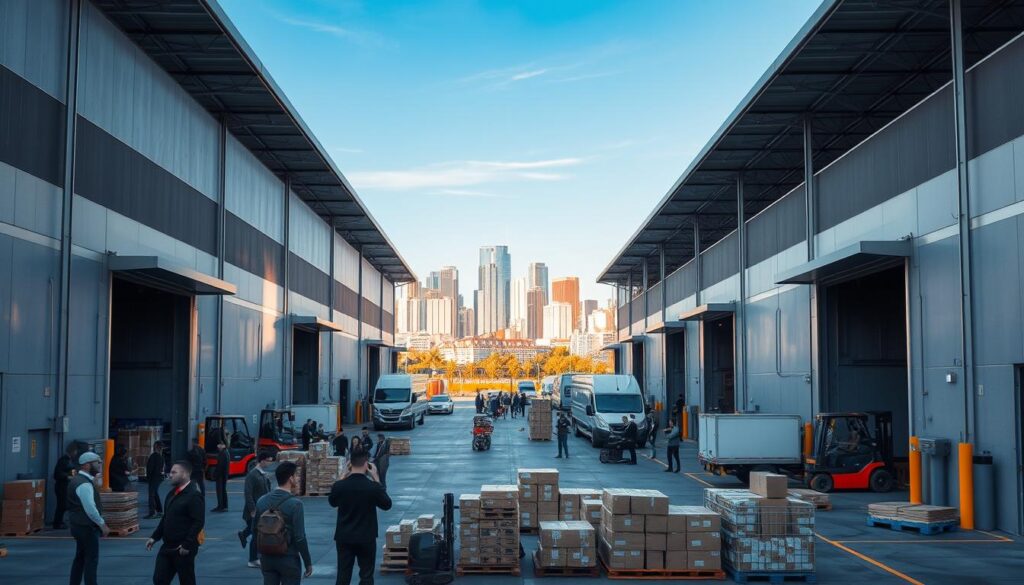
Urban warehousing cuts down delivery times and costs. It also makes customers happier. It lets e-commerce companies adapt quickly to what customers need.
Some main benefits of urban warehousing are:
- Faster last-mile delivery
- Lower shipping costs
- Improved customer satisfaction
- Increased flexibility in logistics
By using urban warehousing, e-commerce can improve its logistics. This helps them grow and stay competitive in the market.
Singapore’s E-Commerce Landscape
Singapore is a key player in e-commerce, thanks to its strategic location and strong digital setup. This has greatly influenced property listings. The city-state’s e-commerce sector has seen rapid growth, fueled by a tech-savvy population and high internet use.
This growth has significantly impacted the industrial real estate market. The demand for warehouses and distribution centers has skyrocketed. As e-commerce grows, the need for modern, well-located warehousing facilities is becoming more critical.
Several factors contribute to Singapore’s thriving e-commerce landscape:
- Advanced logistics and transportation infrastructure
- A highly connected and tech-savvy consumer base
- Supportive government policies and initiatives
- A strategic geographical location
These factors have boosted e-commerce activities and attracted international players. As a result, the demand for industrial properties, including warehouses and fulfillment centers, has increased.
The rise in e-commerce has also led to more property listings for industrial real estate. Investors and developers are taking advantage of this trend. They are building modern warehousing facilities that meet the evolving needs of e-commerce businesses.
Key trends shaping the e-commerce landscape in Singapore include:
- The adoption of advanced technologies such as AI and robotics in warehousing
- The rise of omnichannel retailing
- Increasing demand for same-day and next-day delivery services
As e-commerce continues to grow, understanding these trends and their impact on industrial real estate is vital. It will be crucial for stakeholders in the property market.
Supply Chain Dynamics in E-Commerce
Supply chain dynamics are key to e-commerce success. They affect delivery times and customer happiness. A well-run supply chain helps e-commerce companies stay ahead in a quick market.
E-commerce firms use many strategies to improve their supply chains. Centralized warehousing helps manage inventory better and cuts shipping times. Micro-fulfillment centers, on the other hand, bring products closer to customers, speeding up delivery.
Last-mile logistics hubs are also vital. They enable fast and reliable shipping. Located near people, they often offer same-day or next-day delivery.
Technology, like advanced inventory systems and data analytics, boosts supply chain efficiency. These tools help predict demand, manage stock, and make logistics smoother.
In summary, e-commerce supply chains are complex but crucial. By using centralized warehousing, micro-fulfillment centers, and last-mile hubs, companies can build a strong, responsive supply chain. This meets today’s consumer needs.
Sustainability in Warehousing
The warehousing industry is moving towards sustainability. This is due to growing environmental worries and stricter rules. Companies are now investing in eco-friendly warehousing to cut down their ecological footprint.
Energy-efficient facilities are a big part of sustainable warehousing. These places use smart lighting, insulation, and climate control to save energy. This not only cuts down costs but also reduces harm to the environment.
Electric vehicle (EV) charging stations are also key. As the logistics world moves to electric, the need for charging spots grows. Warehouses with EV charging attract businesses wanting green logistics solutions.
Companies are also looking into other green technologies. These include:
- Renewable energy like solar panels to power warehouses.
- Water-saving measures to cut down water use.
- Waste reduction and recycling to lessen waste.
- Using sustainable materials for building and renovation.
By using these green practices, warehouses can lessen their environmental harm. They also become more appealing to those who value sustainability. This is true in real estate, where green buildings are in high demand.
Sustainability will keep driving innovation and investment in warehousing. Companies focusing on green tech will meet market and regulatory needs better.
Investment Trends in Warehouse Properties
E-commerce growth has led to a big increase in investment in warehouse properties. As people want fast and reliable shipping more, investors see warehouses as a good chance to make money.
The industrial real estate world is changing fast. This is because of the need for modern, tech-savvy warehouses. These places are not just for storing things. They are key parts of the supply chain, with automation and data tools.

- Increased focus on sustainability and green building practices
- Adoption of advanced technologies such as automation and robotics
- Strategic location of warehouses near major transportation hubs
- Development of multi-story warehouses in urban areas
- Emphasis on creating flexible, adaptable warehouse spaces
Developers are coming up with new ideas to meet e-commerce’s future needs. They’re making facilities that are not only efficient but also can change with consumer wants. This includes using green practices and technology to make things run better.
The future looks bright for warehouse properties. This is because e-commerce keeps growing and we need better logistics and distribution systems. Investors should think about these trends when looking at the industrial real estate market.
The Future of Warehousing in E-Commerce
The future of warehousing is closely tied to e-commerce growth. Online shopping is booming, leading to a higher need for efficient, tech-savvy warehouses.
Looking ahead, we’ll see big changes in automated warehouses and urban logistics. These changes will help meet the need for quicker and more reliable delivery.
Automated warehouses will change the game by making operations more efficient and cutting costs. Robotics and AI will be key in this shift.
Urban logistics will also become more important as e-commerce grows. Companies will focus on setting up warehouses in cities to serve the urban population better.
- Innovative warehouse designs that maximize space utilization
- Integration of advanced technologies like IoT and blockchain
- Sustainable practices to reduce the environmental footprint
Investors have a lot to look forward to in the warehousing sector. With growing demand, well-located, modern warehouses will be in high demand.
In conclusion, the future of warehousing in e-commerce looks bright. By embracing new tech and adapting to consumer needs, the industry will thrive.
Case Studies of Successful Warehousing Strategies
Technology has changed how companies work, with Amazon leading the way. It uses advanced tech like robots to make its warehouses more efficient.
Amazon’s robots help pick and pack items fast and accurately. This lets Amazon handle lots of orders, even during busy times like holidays.
Amazon also focuses on making its warehouse layout and operations better. It uses smart tech to guess demand and manage stock. These efforts save money and boost efficiency.
Being able to change with the market is key too. Amazon shows it can adjust its plans when demand shifts. This quick adaptability is a big plus in the fast-changing e-commerce world.
Now, making warehouses more eco-friendly is also important. Companies like Amazon are using green tech and practices. This not only helps the planet but also makes them more appealing to eco-conscious customers.
In short, Amazon’s success shows the value of tech, efficiency, flexibility, and green practices in warehousing. As online shopping grows, companies that use these strategies will likely stay ahead in the market.
Regulatory Considerations for Warehouse Development
Understanding regulatory considerations is key to successful warehouse development. In urban areas, where last-mile delivery hubs are most needed, land shortages and zoning restrictions pose significant challenges.
The property market in Singapore is subject to stringent regulations that impact warehouse development. Zoning laws, in particular, dictate where warehouses can be located, often limiting development to areas outside the city center.
Effective property management involves navigating these regulatory hurdles. Developers must balance the need for strategic locations with the constraints imposed by local regulations.
Some of the key regulatory considerations include:
- Zoning restrictions that limit where warehouses can be built
- Land availability and the cost of acquiring suitable sites
- Environmental regulations that impact warehouse operations
- Compliance with building codes and safety standards
To navigate these challenges, developers are turning to innovative solutions. They are repurposing existing structures or developing multi-story warehouses. These approaches not only help comply with regulations but also enhance the efficiency of warehouse operations.
As the property market continues to evolve, understanding and adapting to regulatory considerations will remain crucial for successful warehouse development.
Conclusion: The Future Relationship between E-Commerce and Warehousing
E-commerce has changed the warehouse and logistics world a lot. It has made people want better, high-tech, and green industrial spaces. As e-commerce keeps growing, we’ll need more flexible and new ways to handle logistics.
In Singapore, the need for good warehouses is still strong. This is because of the country’s great location and growing online shopping market. Investors and developers will look for properties with modern and green features to meet e-commerce needs.
The future of warehouses will be influenced by new tech, changing how people shop, and the push for green practices. As the real estate market adapts, we’ll see more smart and efficient warehouses. These will help e-commerce keep growing in Singapore.